

The Gospel of the Buddha : ค้นหาหนังสือธรรมะ หน้า 22 / 90
หน้าหนังสือทั้งหมด
15
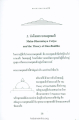
มหาธรรมกายเจดีย์และพระบรมรุพุทธเจ้า
มหาธรรมกายเจดีย์
2. ว่าด้วยพระบรมรุพุทธเจ้า
Maha-Dharkmaya Cetiya
and the Theory of Jina Buddha
ในความรู้ทั่วไป พระบรมรุพุทธเจ้า คือ พระพุทธเจ้าที่ตรัสรู้ล่วงไปนานแล้ว โดยอุฏฐฏฐ ในหนึ่งจักรวาลจะมีพระ
บทความนี้นำเสนอเกี่ยวกับมหาธรรมกายเจดีย์และพระบรมรุพุทธเจ้าซึ่งถือเป็นพระพุทธเจ้าใหญ่ในหนึ่งจักรวาล อธิบายบทบาทและความสำคัญของพระบรมรุพุทธเจ้าผ่านทฤษฎี Jina Buddha ที่มีหลักฐานในประเทศเนปาล ซึ่งประกอบ
7
The Journey of Siddhartha Gotama Towards Enlightenment
he, himself, didn’t engage in the battle against delusion, there would be no-one else to do it in his place. Thus with anxiety, *not only* for his own lot in life, *not only* for the lot of his family
This text delves into Siddhartha Gotama's profound realization that if he did not confront the battle against delusion, no one would. Motivated by anxiety for himself, his family, and all beings trapp
8
The True Nature of the Buddha's Enlightenment
the Buddha’s enlightenment dealt entirely with meditation focussed outside the body. Then, as now, almost all success was attributed to ideas and strategies — but as a result of countless past lifetim
Siddhattha Gotama's enlightenment was rooted in meditation that transcended mere conceptualization. He recognized that achieving true liberation demanded a harmonious blend of theory and inner virtue.
14
Author's Preface on the Uniqueness of Buddhism
Author's Preface
Buddhism is unique in teaching a way to overcome suffering, with its aim definitely to liberate oneself from the Cycle of Existence [vadda-samśāra] thereby attaining the highest eter
The Author's Preface highlights Buddhism's distinctive qualities in teaching ways to alleviate suffering and attain ultimate happiness, emphasizing its systematic approach to teachings and virtues. It
18
The Heir to the Buddha’s Teaching
This book envisions the student of Dhamma as being an “heir” to the Buddha’s Teaching who has the responsibility to study them to the point where they understand them sufficiently deeply to instil the
This book envisions the student of Dhamma as an 'heir' to the Buddha's Teaching, emphasizing the need to understand and instill these teachings in future generations. The author expresses gratitude to
31
Dhammacakkappavattana Sutta: The Sermon
Dhammacakkappavattana Sutta:
The Sermon
Something which you will find at the beginning of every sutta are Aṅanda’s words 'Evam.e sutam...': i.e. ‘Thus have I heard (directly from the Lord Buddha)
The Dhammacakkappavattana Sutta begins with Aṅanda's phrase 'Thus have I heard' and recounts the Buddha's teachings delivered at the Isipatana Deer Park. The Blessed One addresses the group of five mo
39
Understanding Self-Mortification in Buddhism
It is for this reason that the Lord Buddha should want to start his sermon by instructing the ‘group of five’ that indulgence of the senses is unsuitable, base, ignoble, without benefit, unsuitable fo
In this text, Lord Buddha teaches that indulgence of the senses is unsuitable for a Buddhist monk and should be avoided. The practice of self-mortification, common among non-Buddhist ascetics, include
47
Understanding Right Concentration and the Dhammacakka
oupes, keep the Precepts, meditate or listen to Dhamma sermons. Such determination is a precursor of concentration called 'khaṇika-samādhi'.
7.2 Right Concentration (transcendental): At high level Rig
บทความนี้อธิบายถึงการเจริญสมาธิอย่างถูกต้องซึ่งรวมถึงการเข้าถึงสมาธิในระดับที่สูงขึ้น รวมถึง Dhammacakka ซึ่งเป็นแนวทางในการเข้าถึงนิพพาน โดยอธิบายความสัมพันธ์ระหว่างปัจจัยที่นำไปสู่การตรัสรู้และบทบาท
50
Understanding the Noble Truths of Suffering
the 'Noble Truth of the Suffering', the 'Noble Truth of the
Origin of Suffering' and the 'Noble Truth of the Cessation
of Suffering'. In brief, the artistry of the Lord Buddha is to
integrate all four
The teachings of the Lord Buddha encompass the Four Noble Truths, with a significant focus on understanding suffering. Suffering is characterized through various forms — from birth to death, highlight
57
The Noble Truth of the Eightfold Path
4.1 The Path as the Escape from the Cycle of Existence
This is the direct definition of the Noble Truth of the Path to the End of Suffering. Whosoever wishes to traverse the ocean of the Cycle of Exis
This text discusses the Noble Eightfold Path as the essential means to traverse the Cycle of Existence and end suffering. It illustrates the overwhelming nature of this cycle, marked by the suffering
58
Understanding the Noble Eightfold Path
Those who are wise and endowed with Right View will see the dangerous reality of craving, and not delay in practising the Noble Eightfold Path as a vessel to take them beyond the Sea of Worldliness.
4
This text discusses the importance of the Noble Eightfold Path as a means to transcend worldly cravings and achieve Nirvana. It elaborates on how it is the strongest method for ending suffering, highl
74
Understanding Resentment and Suffering in Buddhism
about a certain thing. These are all the characteristics of resentment which will bring us misery for as long as we still harbour it in our hearts.
9. Bemoaning [upāyassa sukkha]
The Buddha characteri
This text delves into the characteristics of resentment as a source of misery and describes the Buddha's teachings on different forms of suffering. It explains how sorrow is a mental state, lamentatio
78
Understanding the Noble Truth of Suffering
tial a person might be, it doesn't merit any special consideration on suffering's part — all are equal in the face of suffering. Thus, realization of the reality of suffering for what it really is, to
This section discusses the Buddhist understanding of suffering, emphasizing that all beings are equal in their experience of suffering. It highlights the significance of realizing the Noble Truth of S
80
The Three Forms of Craving in Buddhism
The Three forms of Craving
The Lord Buddha taught that there are three sorts of craving: craving for sense-pleasure [kāmaṭhaṇa], craving for the form realms [bhavatānha] and craving for the formless r
The Lord Buddha identified three types of craving: 1) Craving for Sense-Pleasure (kāmaṭhaṇa) signifies a longing for sensory experiences which misleads individuals into thinking happiness comes from e
84
The Dangers of Craving in Buddhism
four unfortunate realms [abhāyabhūmi]. Just as the swift currents of a river tend to sweep away all things to the ocean that fall within its reach, desire will tend to pull all beings who entertain it
This text discusses the profound impact of craving on beings, illustrating how it drives them towards hell realms and unwholesome actions. The Buddha's teachings emphasize that craving can lead to sin
119
The Noble Truth of the Path to the Cessation of Suffering
The Noble Truth of the Path to the Cessation of Suffering
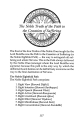
The final of the four Truths of the Noble Ones taught by the Lord Buddha was the Path to the Cessation of Suffering (or the Noble Eightfold P
The Noble Eightfold Path, the final of the Four Noble Truths, is the way to eliminate suffering and attain Nirvana. It consists of eight components: Right View, Right Intention, Right Speech, Right Ac
123
Understanding Suffering and the Subtle Human Body
wealth. As the majority of sorts of suffering concerns material things, having attained the subtle human body, the mind, being unified with the subtle human body, is safely withdrawn beyond the reach
This text discusses why most people suffer due to attachment to their physical bodies and possessions, despite intellectually understanding Buddha's teachings on impermanence. The author emphasizes th
143
Understanding the Dhamma Body and the Noble Path
Dhamma Body — not with the human eye or the naked eye.
All the knowledge that brought him to Buddhahood came
by the ‘knowing’ of the Dhamma Body, not by rationale or
reasoning with the logical (hum
The Dhamma Body can only be perceived beyond the human eye, allowing the Buddha to grasp deep truths about existence. His compassion drove him to teach the Noble Path for the liberation of others, adv
158
The Nature of Wives in Buddhist Teachings
7. A wife like an slave: A wife who allows herself to be abused, slapped or beaten by her husband without becoming angry or vengeful and without blaming her husband, who is contented to be completely
This text discusses different types of wives in Buddhist teachings, illustrating how their characteristics influence their karmic outcomes. It differentiates between negative types, like a wife who is
177
The Enlightenment of the Buddha’s First Disciple
The Enlightenment of the Buddha’s First Disciple
In preaching the Dhammackakapavattana Sutta, the Buddha revealed the Thirty-Seven Factors of Enlightenment [bodhipakkhiyadhamma], the Cycle of Depende
The Buddha, in the Dhammackakapavattana Sutta, introduced the Thirty-Seven Factors of Enlightenment, laying down the framework of the Four Noble Truths and the Cycle of Dependent Origination. Dhammaca